Bigger hospitality decisions need more context
Restaurants, bars, lounges, and rooftops tend to carry more occasion-based decisions than a quick coffee stop. A guest may be planning a date night, a birthday dinner, a private event, a happy hour, a rooftop reservation, or a late-night drink with friends. The website has to make the atmosphere feel right and make the logistics feel clear.
That balance is where many hospitality websites struggle. Some sites look cinematic but hide menus and booking links. Others are practical but forget to show why the place is worth visiting. SEO-first web design should do both. It should help search engines understand the page and help guests feel confident enough to reserve, call, visit, or inquire.
Restaurants need menu, reservation, and occasion structure
A Maryland restaurant website should not rely on one generic page to explain the whole experience. The menu, reservations, private dining, events, location, and gallery each answer different questions. Someone searching for dinner in Baltimore may need a different path than someone searching for private dining in Bethesda or waterfront dining near Annapolis.
The most useful restaurant pages are direct and elegant. They show cuisine, location, hours, reservation path, menu content, and atmosphere quickly. They also avoid locking important information inside a PDF-only menu. A PDF can still exist, but the core content should be readable on the page so guests and search engines can understand it.
Bars and lounges need event clarity
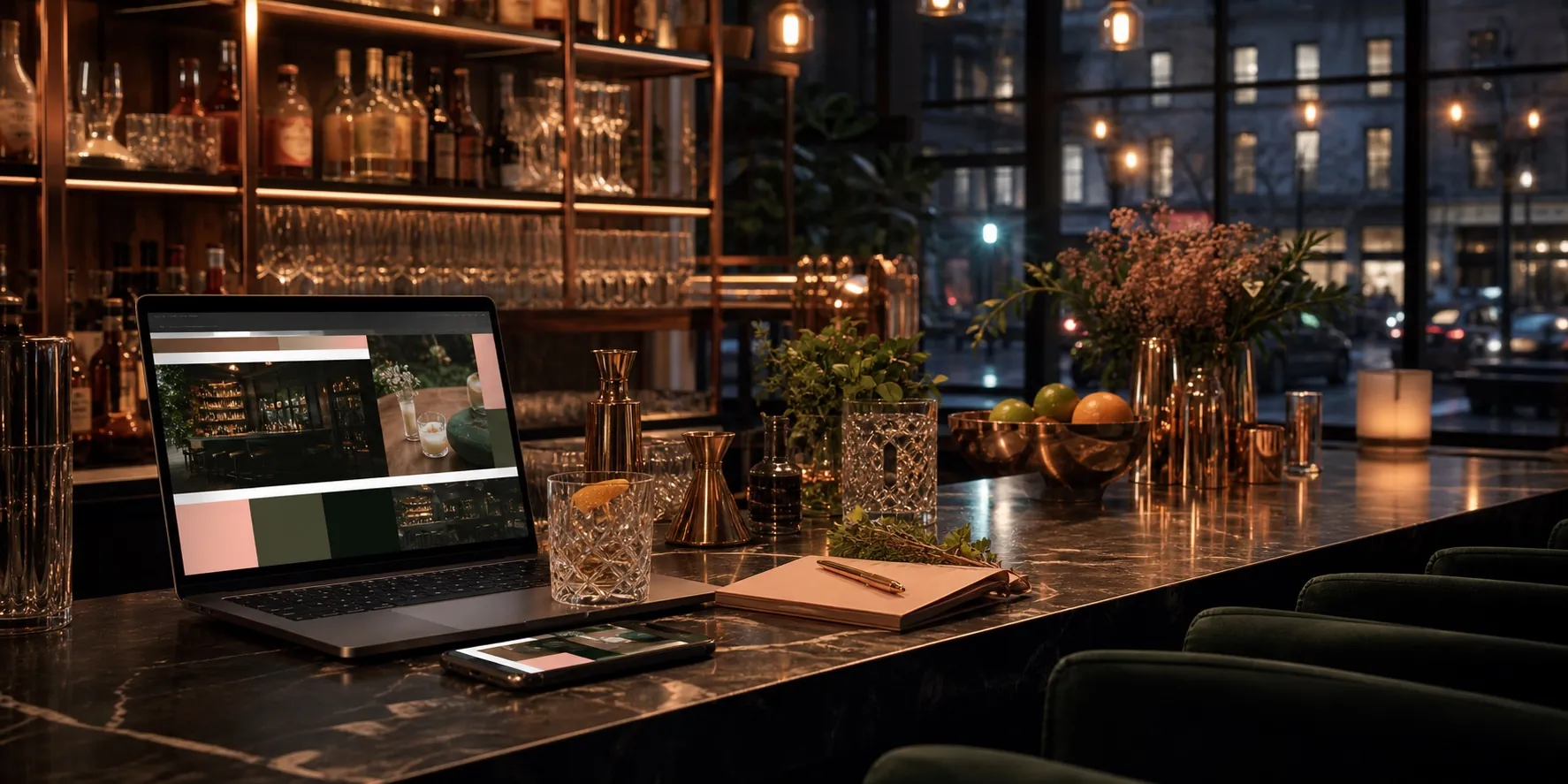
Bar and lounge searches are often immediate: happy hour near me, cocktail bar Baltimore, lounge with live music, sports bar open now, wine bar Annapolis, or private bar event. If events, specials, or group bookings matter to the business, the website should not bury them in a social feed alone.
A crawlable events section or dedicated event page can describe the cadence, atmosphere, timing, and guest expectations. The page should remain easy to maintain because inaccurate nightlife information creates distrust quickly. Good design makes current information feel polished and makes old information easy to remove or update.
Rooftops need weather, views, and seasonal confidence
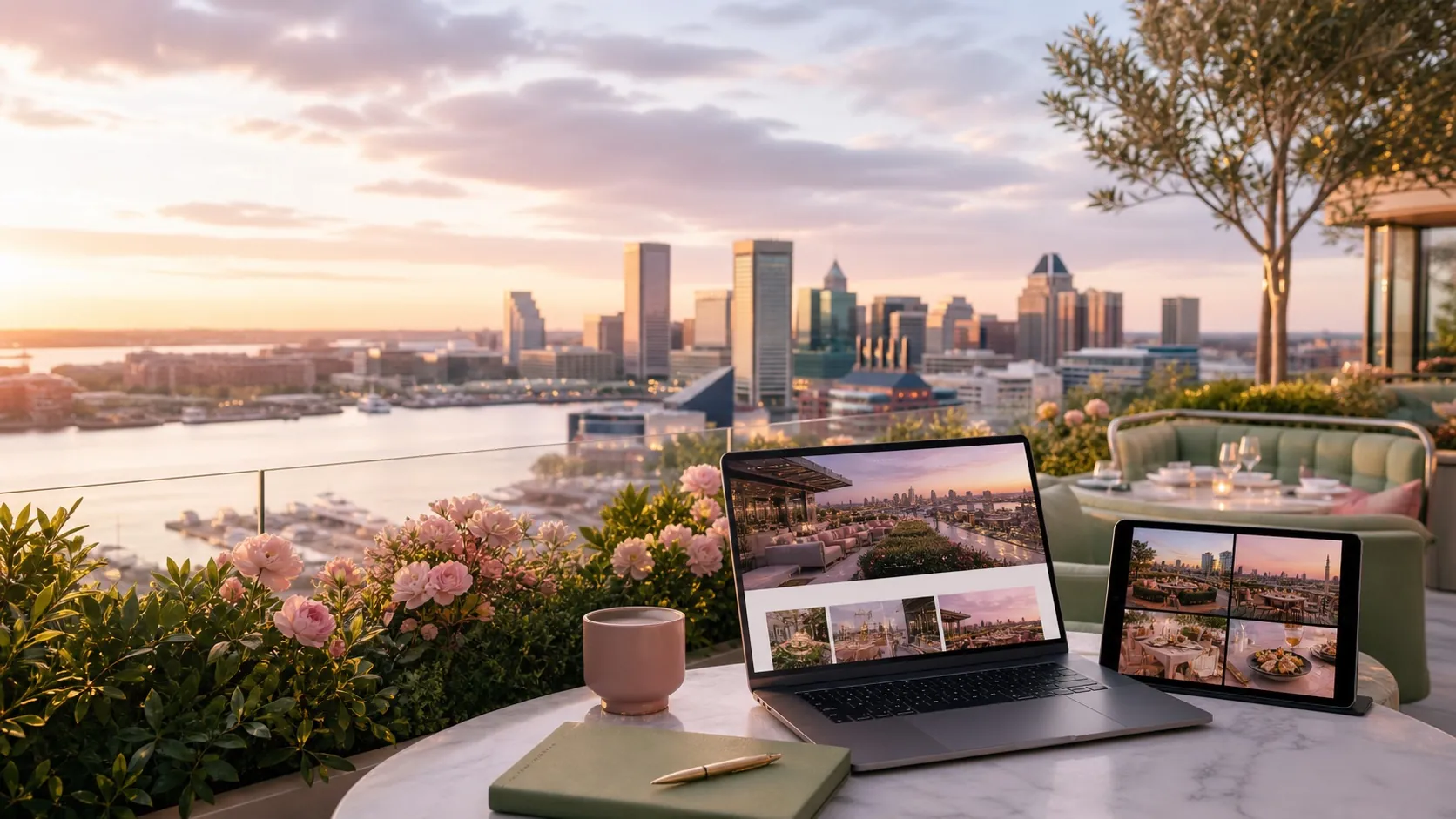
Rooftop venues have a special search profile because the view is part of the offer. Guests search for rooftop bars, rooftop restaurants, skyline drinks, sunset reservations, waterfront views, private events, and seasonal availability. The website needs to show the view while explaining how to plan around it.
That may include reservation timing, weather policies, event capacity, seasonal hours, dress expectations, and the relationship to nearby hotels, harbors, downtown districts, or nightlife corridors. The more specific the rooftop experience, the more useful the page becomes for both guests and search engines.
Maryland localization should be useful, not ornamental
A statewide hospitality site can mention Baltimore, Annapolis, Bethesda, Silver Spring, Frederick, Columbia, Towson, Rockville, Gaithersburg, and Ocean City without turning into a city-name list. The stronger move is to connect each place to a realistic guest behavior. Baltimore may need neighborhood clarity. Ocean City may need seasonal visitor information. Bethesda may need polished comparison content. Annapolis may need waterfront and event context.
That is the difference between local SEO content and filler. Helpful city context makes the page easier to use. It helps a business owner see that the web strategy understands Maryland, and it helps a guest feel oriented before they take action. The search benefit comes from the usefulness, not from repetition.
What to carry forward
- Restaurant pages need menu, reservation, location, and private dining clarity.
- Bars and lounges should make events and atmosphere easy to evaluate.
- Rooftop sites need weather, seasonal, view, and booking details.
- Maryland city references should describe real guest behavior.