
SEO-first web design
SEO-First Web Design for Rooftops in Maryland
A long-form guide to rooftop website design for Maryland venues that need atmosphere, reservations, weather-aware content, events, and local search visibility.
date-night guests, tourists, event planners, hotel visitors, wedding-adjacent groups, corporate planners, and people searching for skyline or waterfront atmosphere
increase reservations, event inquiries, seasonal bookings, group visits, directions, and private terrace leads
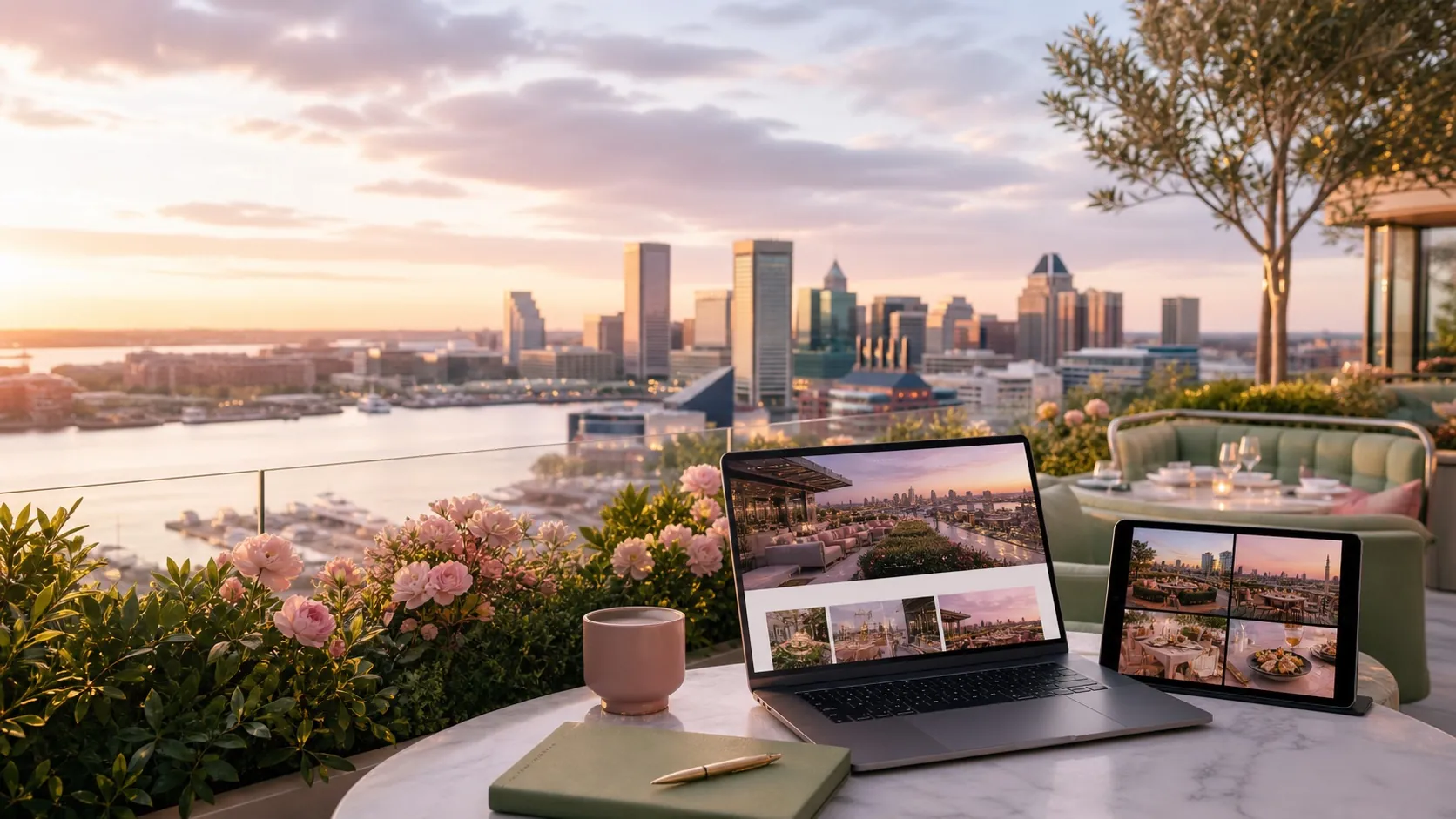
sunset light, airy layouts, skyline or waterfront cues, soft botanical detail, and premium mobile-first booking paths
SEO-first web design for Maryland rooftops
SEO-first web design for rooftops in Maryland starts with a simple truth: people search before they commit. They compare the feeling of the place, the practical details, the menu, the location, and the next step from a phone that may already be competing with maps, social media, and review sites. A strong rooftop website gives those guests enough confidence to keep moving toward the business instead of back to search results.
For rooftops, the website has to serve date-night guests, tourists, event planners, hotel visitors, wedding-adjacent groups, corporate planners, and people searching for skyline or waterfront atmosphere. Those audiences do not all need the same thing, but they all need clarity. The page should explain what the business is, where it is, why it fits the moment, and what to do next. Good SEO is not separate from that experience. It is the structure that makes the site easier for people and search engines to understand.
Reverie Green approaches this kind of hospitality web design with beauty and utility in the same frame. The page should feel airy, elevated, seasonal, scenic, polished, and event-ready, but it should also load quickly, use descriptive headings, carry useful internal links, and put the most important actions within reach. The goal is to make the rooftop feel worth planning around while clarifying reservations, weather, events, and location.
A long-form anchor page also gives the business room to be specific without crowding the homepage. It can explain what makes the category different, how guests search across Maryland, which pages matter most, what kind of imagery supports trust, and how conversion paths should work. That depth is helpful for SEO because it gives the page real substance, but it is also helpful for the owner because it turns a vague web project into a clearer strategic plan.
What guests are really searching for
Search intent for Maryland rooftops is layered. It can include phrases like rooftop bar Maryland, rooftop restaurant Baltimore, rooftop Annapolis, rooftop venue Bethesda, rooftop private events, rooftop brunch, and skyline drinks, but the words are only the surface. Underneath those searches is a guest trying to solve a small decision: Where should I go, is it open, does it fit the occasion, can I order, can I book, and does it feel like my kind of place?
An SEO-first site answers those questions with content architecture. The homepage sets the promise. The menu or offer page gives detail. The location content handles city and neighborhood clarity. The gallery proves the atmosphere. The contact or booking path removes friction. For rooftops, that architecture should support increase reservations, event inquiries, seasonal bookings, group visits, directions, and private terrace leads.
This is also where Maryland localization becomes useful. A statewide strategy should not flatten every place into the same phrase. Baltimore, Annapolis, Bethesda, Silver Spring, Rockville, Frederick, Columbia, Towson, Gaithersburg, and Ocean City each carry different guest patterns. The copy should use those city references only when they help a reader understand fit, convenience, timing, or context.
The page structure rooftops need
The strongest rooftop websites are not built as a pile of sections. They are built as a decision path. A visitor should be able to land on the page, understand the category, see the local relevance, evaluate the offer, and find the next step without wondering where the important information lives. That means the site map, not only the visual design, becomes part of the brand experience.
For rooftops, important operational details include weather policies, seasonality, reservations, event capacity, views, dress notes, hours, private events, and hotel or venue connections. When those details are missing, guests leave to confirm them somewhere else. When they are present but visually buried, the site feels harder to trust. A clean page hierarchy makes the business feel more organized and makes the guest feel cared for before the first visit.
A good anchor page can also protect the homepage from doing too much. Instead of stuffing every search phrase into one general services page, the rooftop page can speak deeply about that specific category while linking naturally to related hospitality pages. That keeps the cluster useful and gives search engines a crawlable map of related services.
Maryland local SEO without keyword stuffing
Rooftop search depends on place and occasion, so Maryland pages should connect the view to city, season, and booking details. The words should sit in prominent, useful places: the title, main heading, section headings, image alt text, captions, city-specific context, and internal link text. They should not make the page sound robotic. The best local SEO copy sounds like a person who understands how guests choose a place in Maryland.
For example, Baltimore content may need to mention neighborhood discovery, event districts, harbor-area visitors, universities, or business corridors depending on the concept. Annapolis content may need weekend, waterfront, tourism, government, or event context. Bethesda and Rockville may need polished comparison details, parking, reservations, and commuter convenience. Ocean City may need seasonal and visitor planning details.
The site also needs technical clarity. Crawlable links, descriptive page titles, fast images, alt text, a sitemap, and consistent metadata all support discovery. None of those choices replace helpful content, but they help that content become easier to find. That balance follows the same principle as the design itself: make the beautiful thing understandable.
Visual direction and page speed should work together
Hospitality is sensory, so visuals matter. For rooftops, the site should show the room, the product, the menu, the mood, and the details that make the brand distinct. The visual direction can be sunset light, airy layouts, skyline or waterfront cues, soft botanical detail, and premium mobile-first booking paths. The images should feel professional, current, and specific enough that a visitor understands the experience without needing a long explanation.
But beautiful imagery should not make the website slow. Oversized photos, autoplay-heavy pages, uncompressed galleries, and decorative motion can damage the first impression. A better system uses a curated image set, responsive sizing, compression, meaningful captions, and a layout that reserves space so pages feel stable while loading.
This is especially important for Maryland hospitality searches because many visitors are mobile. A guest may be walking downtown, sitting in a rideshare, comparing options from a hotel room, or checking hours from a parking lot. The design has to feel polished under those conditions, not only on a large desktop monitor.
Content that supports conversion
The conversion path for rooftops should match the business model. Some brands need reservations. Some need online orders. Some need custom inquiry forms, event leads, calls, directions, gift cards, newsletter signups, or private booking requests. An SEO-first website should not force every guest through the same generic contact button.
The page should anticipate moments like searching for a special view for tonight, planning a sunset reservation, checking weather or seasonal availability, comparing venues for a private event, looking for a rooftop near a hotel, harbor, or downtown district. Each moment can become a design decision. If guests need hours quickly, make hours visible. If they compare menus, make menus readable. If they plan events, create a page that explains capacity, timing, and inquiry steps. If they need directions, do not hide the address in the footer only.
This does not mean every page needs to become loud or sales-heavy. Reverie Green's approach is calmer: clear sections, strong hierarchy, elegant calls to action, and content that helps the right person say yes. The page can feel dreamy and refined while still behaving like a practical business tool.
A launch system that can keep improving
A hospitality website is never completely static. Menus change, events appear, hours shift, seasonal offers come and go, and new photography becomes available. For rooftops, the site should be designed so updates are expected rather than disruptive. That means reusable content sections, clear image specs, and page structures that do not fall apart when a new offer is added.
Post-launch improvement is also part of SEO. Search performance depends on crawlability, usefulness, freshness where it matters, and the ability to answer better questions over time. A site that starts with clean architecture can keep growing with new city pages, event pages, menu improvements, journal content, and internal links without losing its visual discipline.
The strongest Maryland hospitality websites feel complete on day one and flexible after launch. They carry the brand's atmosphere, give guests the practical information they need, and create enough structure for future content to land gracefully. That is what makes SEO-first web design a long-term asset instead of a one-time decoration.
Recommended structure
Page modules that help rooftops convert.
Hero with the view, location, and strongest booking path
Reservations, weather, and seasonal availability information
Event page for private parties, weddings, corporate events, or buyouts
Menu or experience page for drinks, food, brunch, or sunset service
City content that clarifies the skyline, waterfront, hotel, or neighborhood context
Gallery that balances atmosphere with optimized load speed
Maryland city strategy
Local SEO context across the state.
Baltimore
Baltimore searches often mix neighborhood intent with immediate decisions, so pages should make the area, offer, hours, and next action obvious without forcing guests to dig. For rooftops, this means connecting weather policies, seasonality, reservations, event capacity, views, dress notes, hours, private events, and hotel or venue connections to a page that feels local, current, and easy to act on.
Annapolis
Annapolis audiences include locals, visitors, waterfront planners, and weekend guests, which makes strong mobile pages, directions, atmosphere, and event-friendly content especially useful. For rooftops, this means connecting weather policies, seasonality, reservations, event capacity, views, dress notes, hours, private events, and hotel or venue connections to a page that feels local, current, and easy to act on.
Bethesda
Bethesda search behavior is polished and comparison-heavy, so the site needs premium visuals, concise service details, accurate menus, and a fast path from interest to action. For rooftops, this means connecting weather policies, seasonality, reservations, event capacity, views, dress notes, hours, private events, and hotel or venue connections to a page that feels local, current, and easy to act on.
Silver Spring
Silver Spring rewards clarity around walkability, hours, events, family plans, and nearby neighborhoods because guests often compare multiple options on the same small screen. For rooftops, this means connecting weather policies, seasonality, reservations, event capacity, views, dress notes, hours, private events, and hotel or venue connections to a page that feels local, current, and easy to act on.
Rockville
Rockville visitors may search around errands, workdays, dinner plans, and catering, so the site should connect location, menu, parking, ordering, and contact details quickly. For rooftops, this means connecting weather policies, seasonality, reservations, event capacity, views, dress notes, hours, private events, and hotel or venue connections to a page that feels local, current, and easy to act on.
Frederick
Frederick searches often respond to local character, historic streets, day trips, and special occasions, making brand story and well-labeled city content important. For rooftops, this means connecting weather policies, seasonality, reservations, event capacity, views, dress notes, hours, private events, and hotel or venue connections to a page that feels local, current, and easy to act on.
Columbia
Columbia searches tend to include family, office, lakefront, and group-planning context, so the website should make capacity, timing, booking, and menu fit easy to understand. For rooftops, this means connecting weather policies, seasonality, reservations, event capacity, views, dress notes, hours, private events, and hotel or venue connections to a page that feels local, current, and easy to act on.
Towson
Towson needs practical student, family, and professional discovery paths, with quick mobile navigation, clear calls to action, and local language that feels natural. For rooftops, this means connecting weather policies, seasonality, reservations, event capacity, views, dress notes, hours, private events, and hotel or venue connections to a page that feels local, current, and easy to act on.
Gaithersburg
Gaithersburg pages should help suburban guests decide fast by connecting the offer to nearby corridors, ordering habits, event needs, and everyday convenience. For rooftops, this means connecting weather policies, seasonality, reservations, event capacity, views, dress notes, hours, private events, and hotel or venue connections to a page that feels local, current, and easy to act on.
Ocean City
Ocean City traffic is seasonal and visitor-heavy, so the website needs strong image cues, location clarity, hours, reservation details, and content that works for travelers. For rooftops, this means connecting weather policies, seasonality, reservations, event capacity, views, dress notes, hours, private events, and hotel or venue connections to a page that feels local, current, and easy to act on.
Local search signals
Details worth building into the page.
- city, skyline, waterfront, and venue language in helpful places
- seasonal and weather information that stays current
- reservation and event pages with clear expectations
- optimized images that describe the rooftop experience
- internal links from rooftop page to menus, events, and contact
Questions
Common SEO-first web design questions for rooftops.
What should a rooftop venue website explain clearly?
It should explain the view, location, hours, reservation process, weather policy, private event options, menu, and seasonal availability so guests know how to plan.
Can rooftop web design support event inquiries?
Yes. A dedicated event section can describe capacity, mood, timing, amenities, and the inquiry process, which helps planners decide whether to reach out.
How can rooftop images stay fast?
Use a small edited set of responsive images, compress them carefully, avoid huge background files, and place each image near relevant copy with descriptive alt text.