Hospitality search is local, specific, and emotional
A Maryland hospitality brand is rarely competing on one simple keyword. A guest may search for a cafe near a meeting, a bakery that can handle a custom cake, a coffee shop with Wi-Fi, a restaurant for a birthday dinner, a bar with live music, or a rooftop with a view. Those searches are practical, but they are also emotional. People want the right fit for a moment.
That is why an SEO-first content cluster works better than one general services page. Each anchor page can speak to a different hospitality concept while still connecting back to the same web design expertise. Cafes, bakeries, coffee shops, diners, restaurants, lounges, bars, and rooftops have different conversion paths, different image needs, and different local search language. Treating them as separate pages gives each audience a clearer answer.
The anchor pages do the heavy lifting
An anchor page should be more than a landing page with a few decorative keywords. It should explain the business category, the local search opportunity, the decisions guests make on mobile, the pages a site needs, and the content that helps people choose. For a cafe, that might include seating, Wi-Fi, menu freshness, and private gatherings. For a bakery, it might include preorders, custom cakes, allergens, and pickup windows.
The goal is to give every major topic enough depth to stand on its own. A strong anchor page can link to related anchors, supporting blog posts, and the contact page without feeling forced. That internal link structure helps visitors move naturally through the site and gives search engines crawlable connections between related ideas.
Maryland city context keeps the content grounded
A statewide page should not pretend that Baltimore, Annapolis, Bethesda, Silver Spring, Frederick, Columbia, Towson, Rockville, Gaithersburg, and Ocean City all search the same way. They share some hospitality behaviors, but each city has different visitor patterns, commuter routines, event culture, and neighborhood expectations. The best content uses that local context carefully.
The key is not repeating city names until the page feels artificial. The key is describing how guests actually make decisions in those places. Baltimore may need neighborhood clarity. Annapolis may need visitor and waterfront context. Bethesda may need a polished comparison experience. Ocean City may need seasonal planning details. That kind of specificity supports SEO because it also helps real people.
Images matter because hospitality is sensory
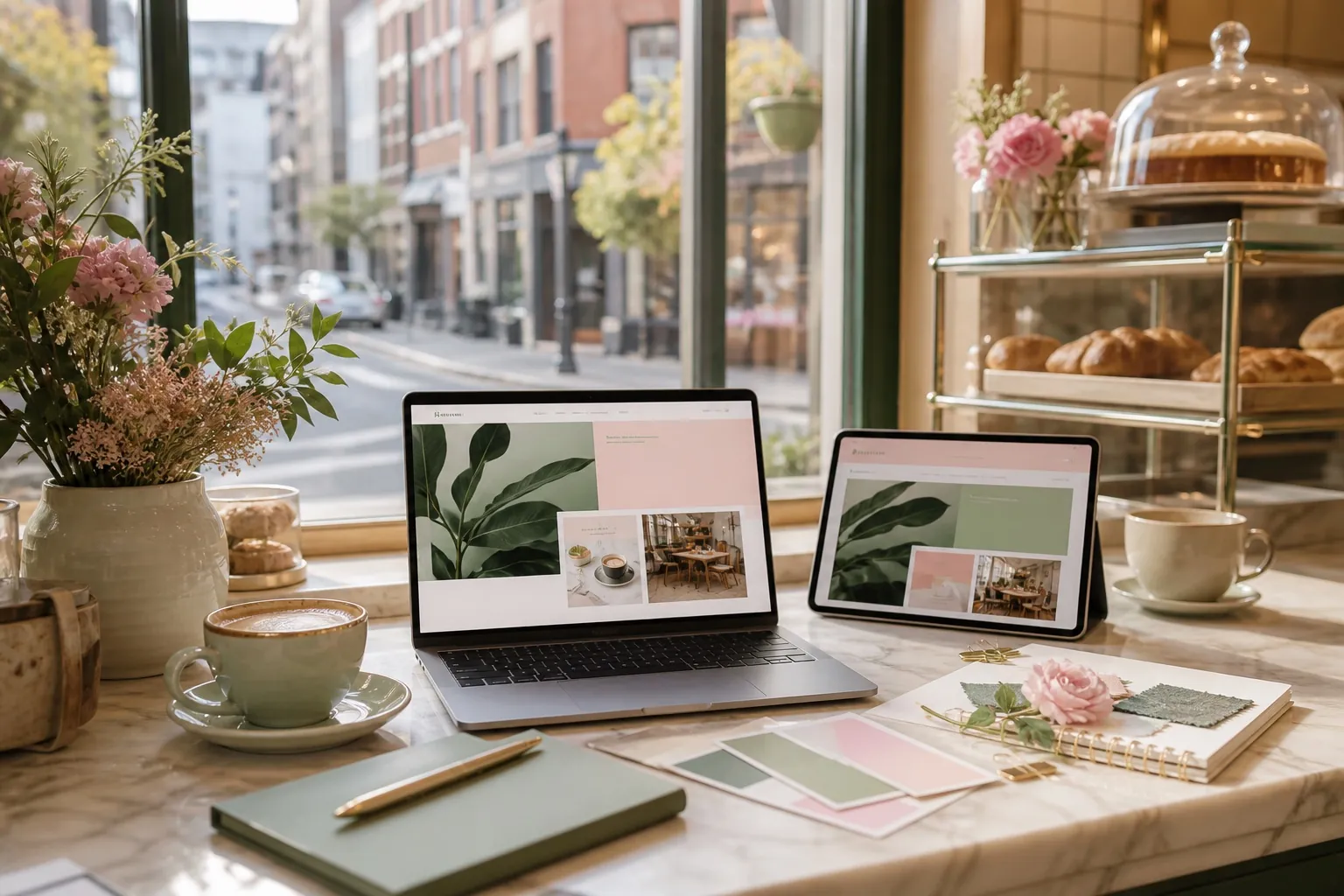
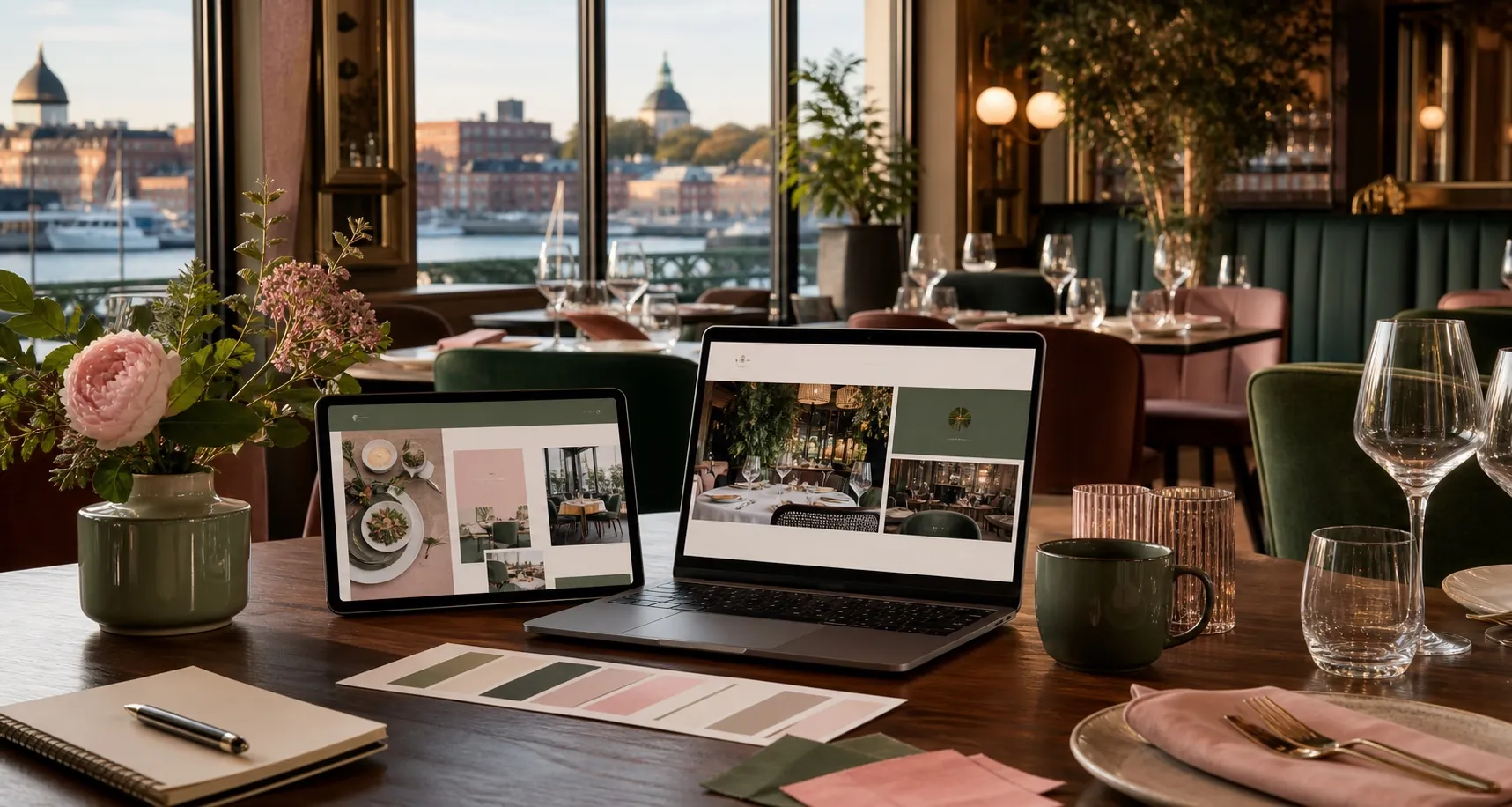
Hospitality websites cannot rely on copy alone. A guest wants to feel the room, understand the food or drink, and know whether the place matches the occasion. Clean, professional imagery makes the page easier to trust, but the images still need to be optimized. Descriptive filenames, useful alt text, responsive sizing, and careful compression let visuals support search and speed instead of working against them.
For Reverie Green, the visual system should feel dreamy and polished without becoming vague. Blush and sage can frame the content, but each image still needs to reveal the category: a cafe counter, a bakery case, a coffee bar, a diner table, a dining room, a lounge, a cocktail bar, or a rooftop setting. Specificity is what keeps the aesthetic useful.
The cluster should lead to action
A content cluster is not a library for its own sake. It should help a Maryland hospitality owner recognize that Reverie Green understands their category and can translate it into a site that looks good, loads quickly, and supports local search. Every page should eventually make the next step feel simple: read the related page, explore the service, or start a project conversation.
When the cluster is built well, it becomes a practical map of expertise. The blog posts explain the strategy. The anchor pages go deep on each topic. The internal links create a clear path through the material. The contact page catches qualified interest. That is the quiet power of SEO-first web design: it makes the right decision easier for both searchers and site owners.
What to carry forward
- Give each hospitality category its own deep anchor page.
- Use Maryland city context naturally instead of stuffing location names.
- Optimize images with descriptive filenames, alt text, compression, and nearby relevant copy.
- Connect anchors, journal posts, services, and contact paths with crawlable internal links.